Japanese
Teriyaki Salmon
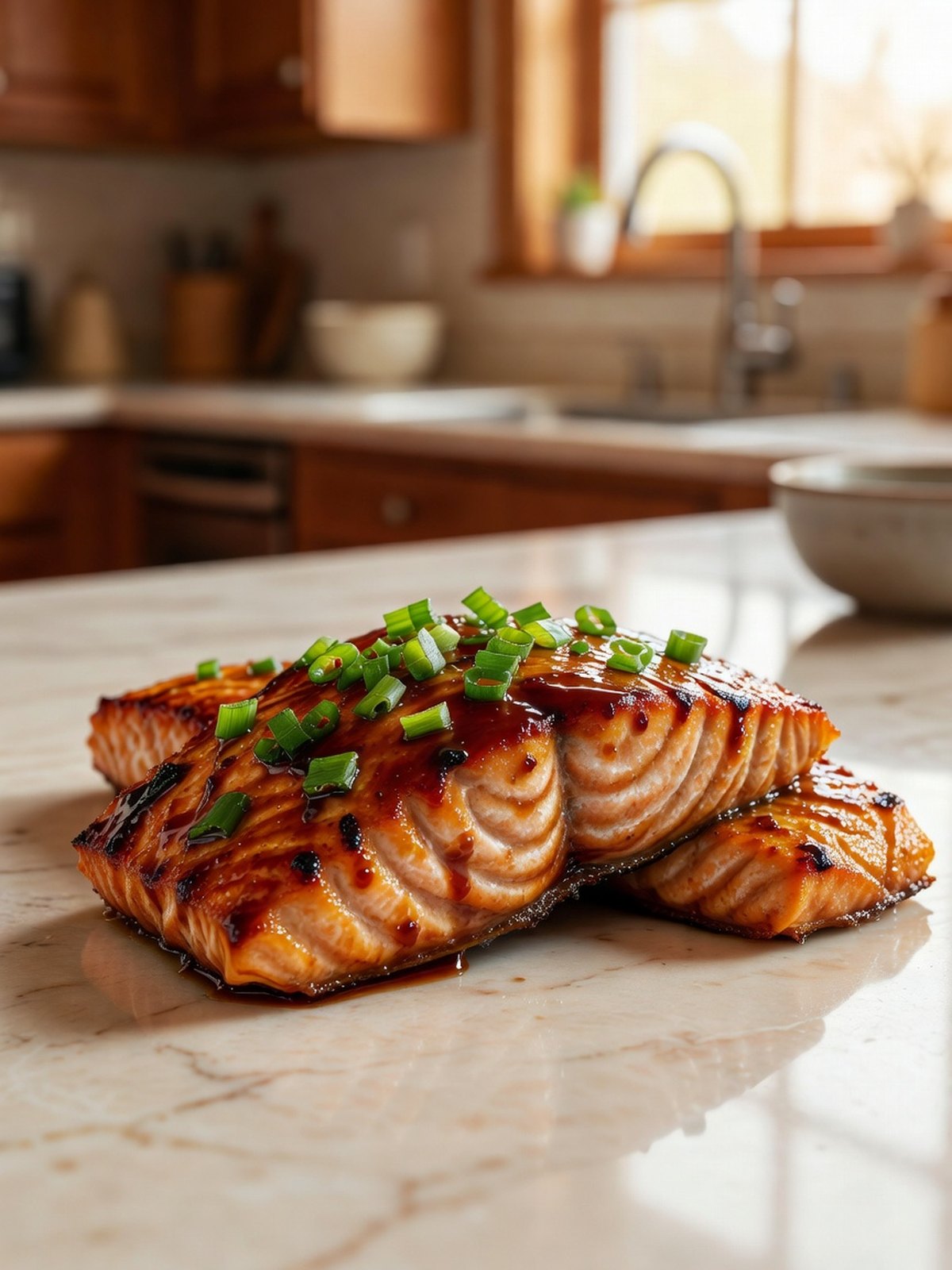
Salmon fillets roast at 400°F while a soy and brown sugar glaze thickens on the stove. The fish is done when the thickest part reaches 145°F.
- Prep
- 10 min
- Cook
- 18 min
- Total
- 28 min
- Servings
- 4
- Difficulty
- Easy
Why you’ll love it
- A cornstarch slurry makes a glaze that clings instead of running off.
- Roasting the salmon on a lined pan keeps the glaze from burning on the rack.
- The sauce is simmered separately so the fish is not boiled in soy.
- Scallions and sesame seeds add crunch after the heat is off.
Ingredients
Ingredient amounts scale. Oven temperature and cook time do not. Salt, spices, and leaveners are a starting point after you scale. Taste and adjust.
Check the ingredients you still need, then add them. If nothing is checked, the full list is added. Saved on this device.
Instructions
- 1
Heat the oven to 400°F. Line a sheet pan and brush it with the vegetable oil. Pat the salmon dry and set it skin-side down if the skin is on.
- 2
Stir the soy sauce, brown sugar, 1 tbsp water, rice vinegar, ginger, and garlic in a small saucepan. Bring to a simmer over medium heat.
- 3
Stir the cornstarch with the remaining 1 tbsp water. Whisk it into the saucepan and simmer 1 minute until glossy.
- 4
Spoon half the glaze over the salmon. Roast until the thickest part reaches 145°F, about 12 to 15 minutes.
- 5
Brush with the remaining glaze in the last 3 minutes of roasting.
- 6
Rest 2 minutes, then top with sesame seeds and scallions.
Pro tips
- If the glaze darkens too fast, tent the pan with foil for the last few minutes.
- Pull the salmon at 145°F even if you like it softer; do not serve it rare.
- Warm leftover glaze to spoon over rice.
Easy substitutions
- brown sugar
- honey
- rice vinegar
- lime juice
- salmon fillets
- arctic char fillets, still cooked to 145°F
Storage and reheating
Storage
Refrigerate in a covered container up to 2 days.
Reheating
Warm in a 300°F oven until the salmon reaches 145°F, and add a spoon of water so the glaze does not scorch.
Nutrition
Estimates per serving, using standard ingredient averages and rounded to the nearest gram. This is not a lab analysis, and it shifts if you change brands or add sides.
- Calories
- 344
- Protein
- 34 g
- Carbs
- 16 g
- Fat
- 16 g
- Fiber
- 0 g
Moderate · Oven, Stovetop · Dairy-Free, High Protein
You might also like
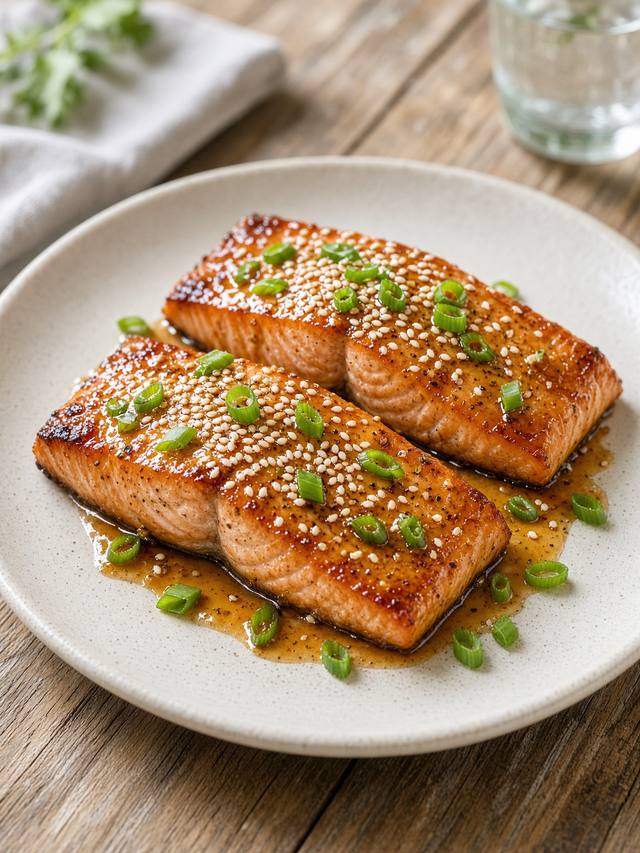
Honey Garlic Salmon
Salmon fillets roasted with a honey, soy, and garlic glaze until the thickest part reaches 145°F. The extra sauce simmers for a minute so it clings.
25 min · Easy
View recipe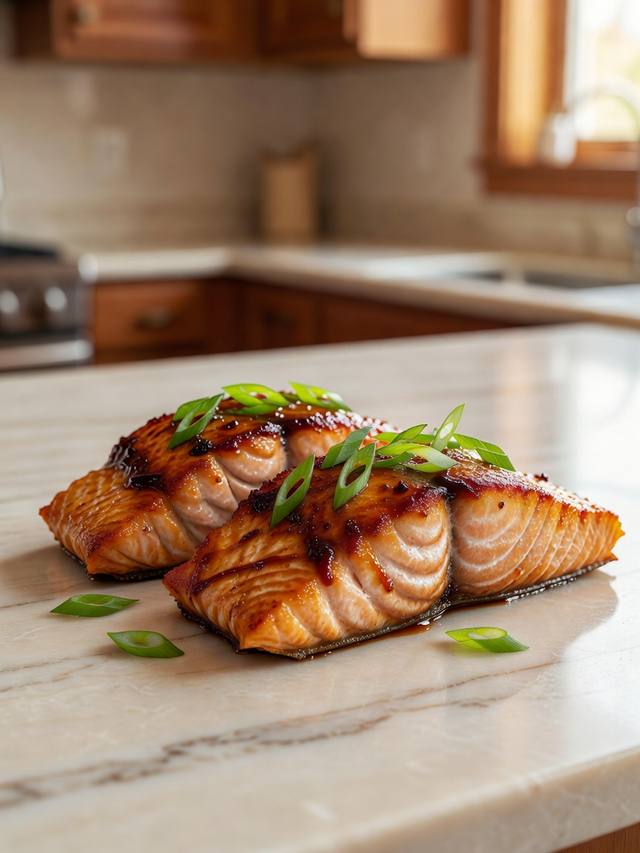
Maple Glazed Salmon
Salmon roasts under a maple, soy, and Dijon glaze at 400°F until the thickest part reaches 145°F. The glaze is brushed on twice so it sticks without burning.
26 min · Easy
View recipe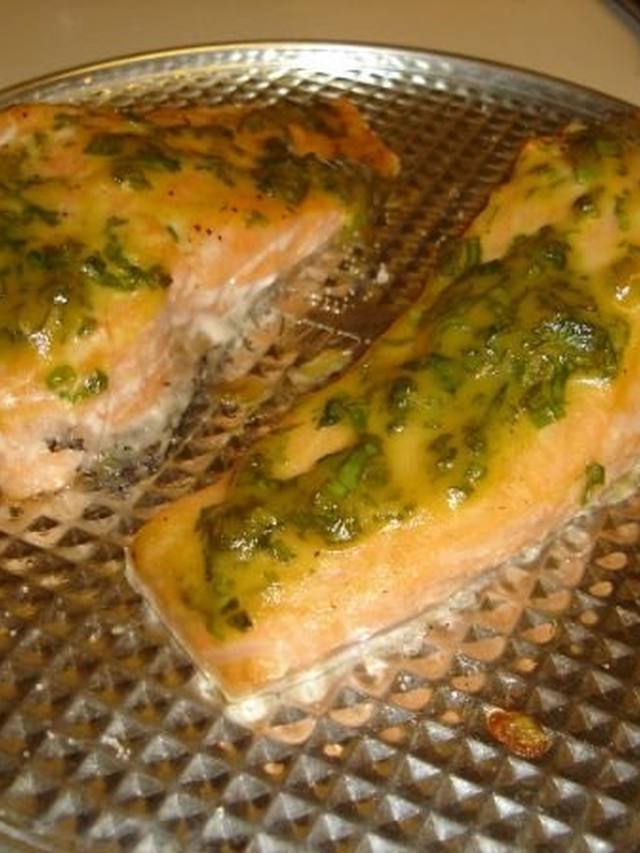
Baked Salmon with Dijon Crust
Salmon fillets get a thin coat of Dijon and breadcrumbs, then bake until the topping is golden. The mustard keeps the fish moist underneath.
26 min · Easy
View recipe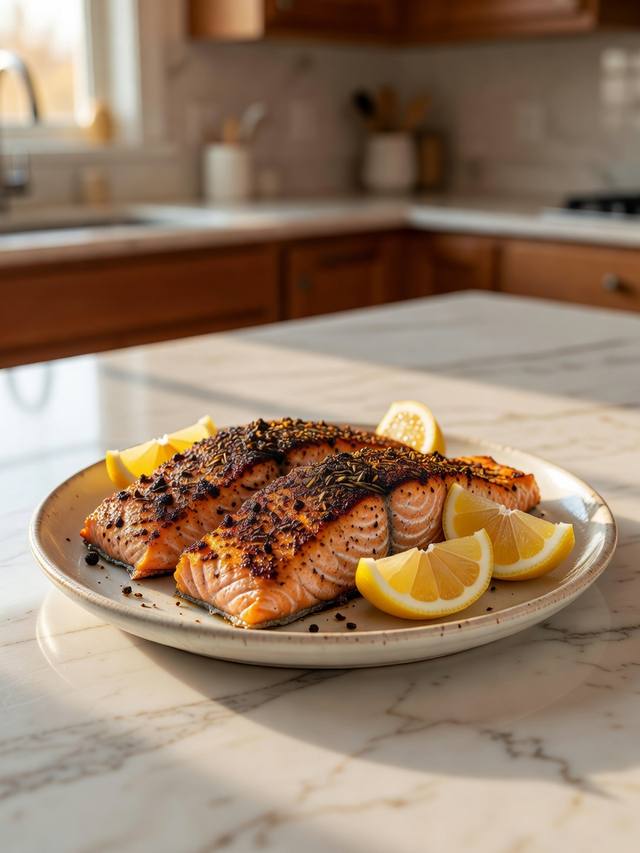
Blackened Salmon
Salmon fillets get a paprika and cayenne crust and sear in butter until the center reaches 145°F. The crust should be dark red-brown, not burnt.
22 min · Easy
View recipeStill hungry?
More in the same lane, not a random mix.
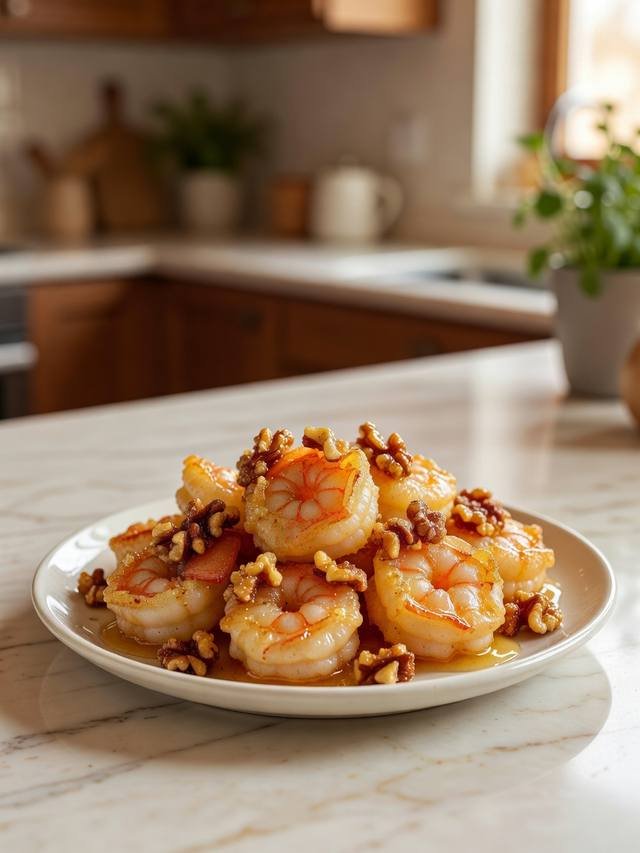
Honey Walnut Shrimp
Shrimp are coated in a light cornstarch batter, fried until they reach 145°F, and tossed in a honey-mayonnaise sauce. Candied walnuts go on at the end so they stay crunchy.
35 min · Medium
View recipe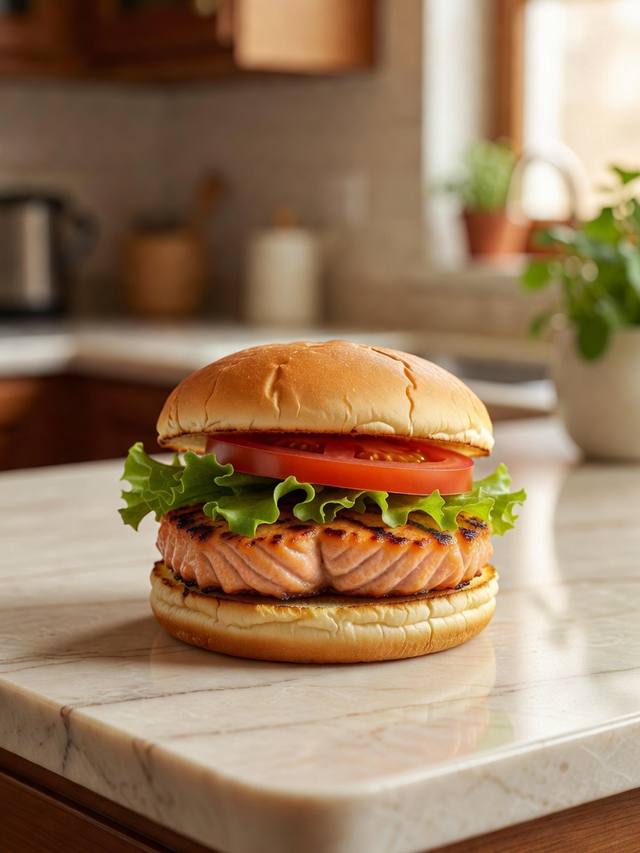
Salmon Burgers
Chopped salmon is mixed with scallion, mustard, and panko and seared into patties that reach 145°F in the center. They are served on toasted buns with lettuce and tomato.
32 min · Medium
View recipe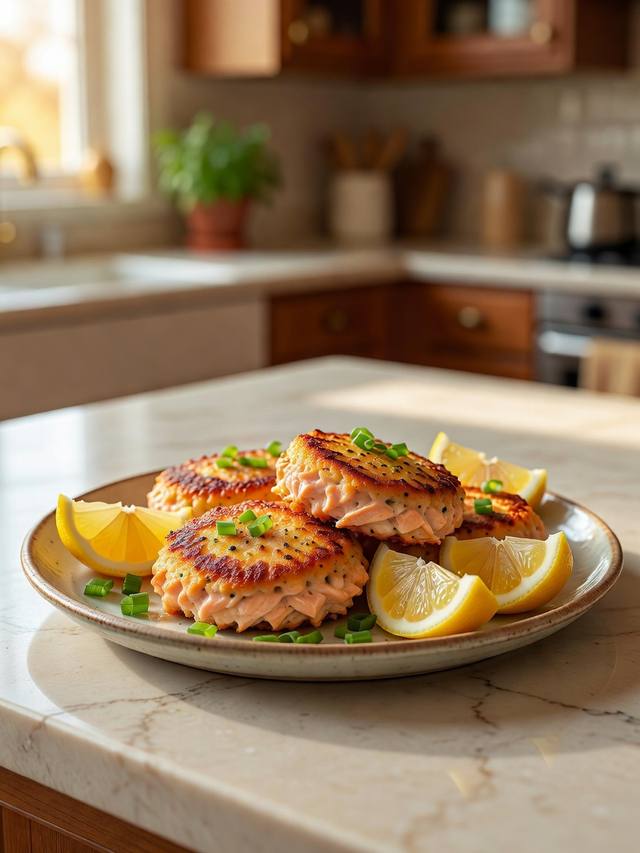
Salmon Cakes
Chopped fresh salmon is bound with egg, mustard, and panko, then pan-fried until the centers reach 145°F. The cakes stay moist because the salmon is cut by hand, not pureed.
32 min · Medium
View recipe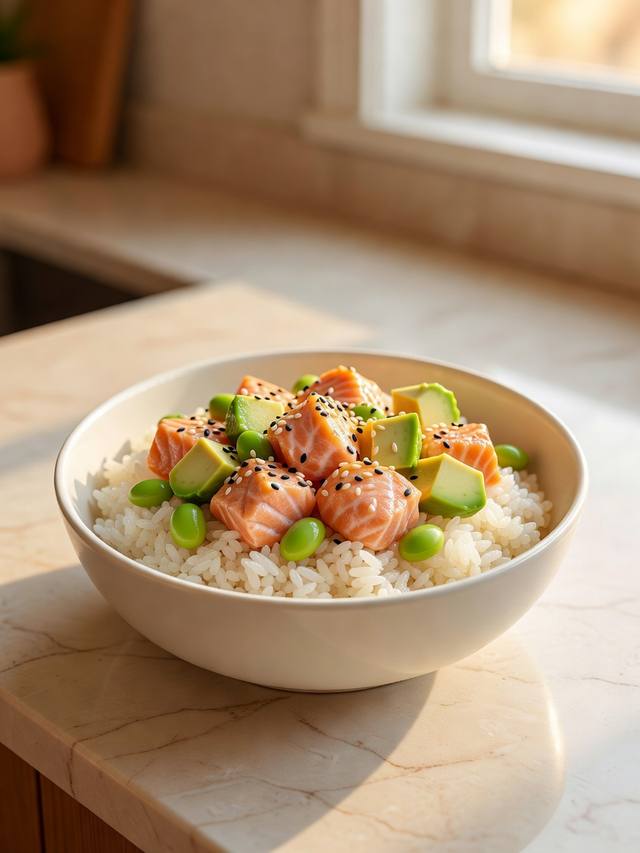
Salmon Poke Bowls
Salmon is cooked to 145°F, cooled, and cubed, then set over rice with edamame, avocado, and a soy-sesame sauce. This is a cooked poke-style bowl, not raw fish.
35 min · Medium
View recipeFind something else
From the kitchen
Kitchen tools we love
Practical tools these recipes actually use. This is not a review roundup, and these are not paid placements. If affiliate links are added later, they will be labeled and disclosed.
A heavy 12-inch skillet
Most of the chicken and steak recipes are written for one pan that holds heat. Stainless or cast iron both work.
An air fryer with a real basket
The air-fryer recipes expect a single layer. A crowded basket steams instead of browning.
A half-sheet pan
Drumsticks, potatoes, sausage, and carrots all use one. A dark pan browns faster than a very shiny one.
A sharp chef’s knife
These recipes do not need a specialty blade. A sharp 8-inch knife is faster and safer than a dull one.
A large cutting board
Big enough that the onion and the raw chicken are not sharing the same puddle.
Dry cups and a liquid cup
Desserts in particular expect level dry measures and a separate cup for milk.
An instant-read thermometer
Use it for poultry, pork chops, and meatloaf. Color is a weak guide.
Read the affiliate disclosure.